The 78% Cloud-Native Tipping Point: Why Broadcasters Are Moving from the Server Room to the Cloud
![[HERO] The 78% Cloud-Native Tipping Point: Why Broadcasters Are Moving from the Server Room to the Cloud](https://irp.cdn-website.com/3bcc3595/dms3rep/multi/opt/nks-1920w.png)
The numbers don't lie. According to the 2026 NewscastStudio Industry Sentiment Survey, 78% of new broadcast facilities are now deploying cloud-native and IP-based infrastructure by default. That's not a prediction for the future: it's happening right now.
For radio broadcasters, this represents a fundamental shift in how stations operate, scale, and compete. The server room: once the beating heart of every broadcast facility: is rapidly becoming a relic of a different era.
The question isn't whether cloud adoption will happen. It's whether your station is ready to make the move.
What's Driving the Shift?
Three forces are pushing broadcasters away from traditional hardware and toward cloud-native solutions.
Aging Hardware and Rising Maintenance Costs
Server rooms don't age gracefully. The hardware that powered your station five years ago is now approaching end-of-life. Replacement parts are expensive: if you can find them at all. Maintenance windows eat into programming time. And every year, the cost of keeping legacy systems alive increases while their reliability decreases.
For many stations, the maths has become unavoidable: continuing to patch ageing infrastructure costs more than replacing it entirely.
The IP Workflow Revolution
SMPTE ST 2110 has fundamentally changed broadcast infrastructure. This suite of standards enables the transport of video, audio, and ancillary data over IP networks: replacing the proprietary, hardware-dependent systems of the past.
Industry projections suggest 85% of tier-1 broadcasters will complete their IP core infrastructure by the end of 2027. Tier-2 and tier-3 operators are following close behind.
For radio, IP-based workflows mean:
- Simplified signal routing and distribution
- Greater flexibility for remote production
- Easier integration with streaming platforms and FAST channels
- Reduced dependency on specialised broadcast hardware

Economic Pressure for Better ROI
Broadcast budgets aren't getting bigger. Yet audience expectations: and the platforms you need to reach them on: continue to multiply. Stations need to do more with less.
Cloud infrastructure delivers exactly that. No capital expenditure on hardware. No air conditioning bills for server rooms. No emergency callouts when drives fail at 3am on a Sunday. Instead, you get predictable monthly costs and the ability to scale resources up or down based on actual demand.
The Hybrid Reality
Here's something the industry has learned over the past few years: full cloud-only workflows aren't always the answer.
The smartest broadcasters are adopting hybrid models: combining the reliability of on-premises systems with the flexibility of cloud resources. This approach delivers distinct advantages:
- Cost predictability: On-premises infrastructure handles consistent, day-to-day workloads. Cloud resources handle variable demand: like major events or breaking news coverage.
- Operational control: Live broadcasts require absolute reliability. Hybrid models let you maintain that control while still gaining cloud benefits.
- Gradual migration: You don't have to rip and replace everything overnight. Hybrid approaches let you transition at your own pace.
The goal isn't to abandon everything that works. It's to build infrastructure that serves you today while positioning you for tomorrow.
Addressing the Objections
Every operations manager has the same concerns when cloud comes up. Let's address them directly.
"What About Latency?"
Valid concern. Live radio demands real-time performance.
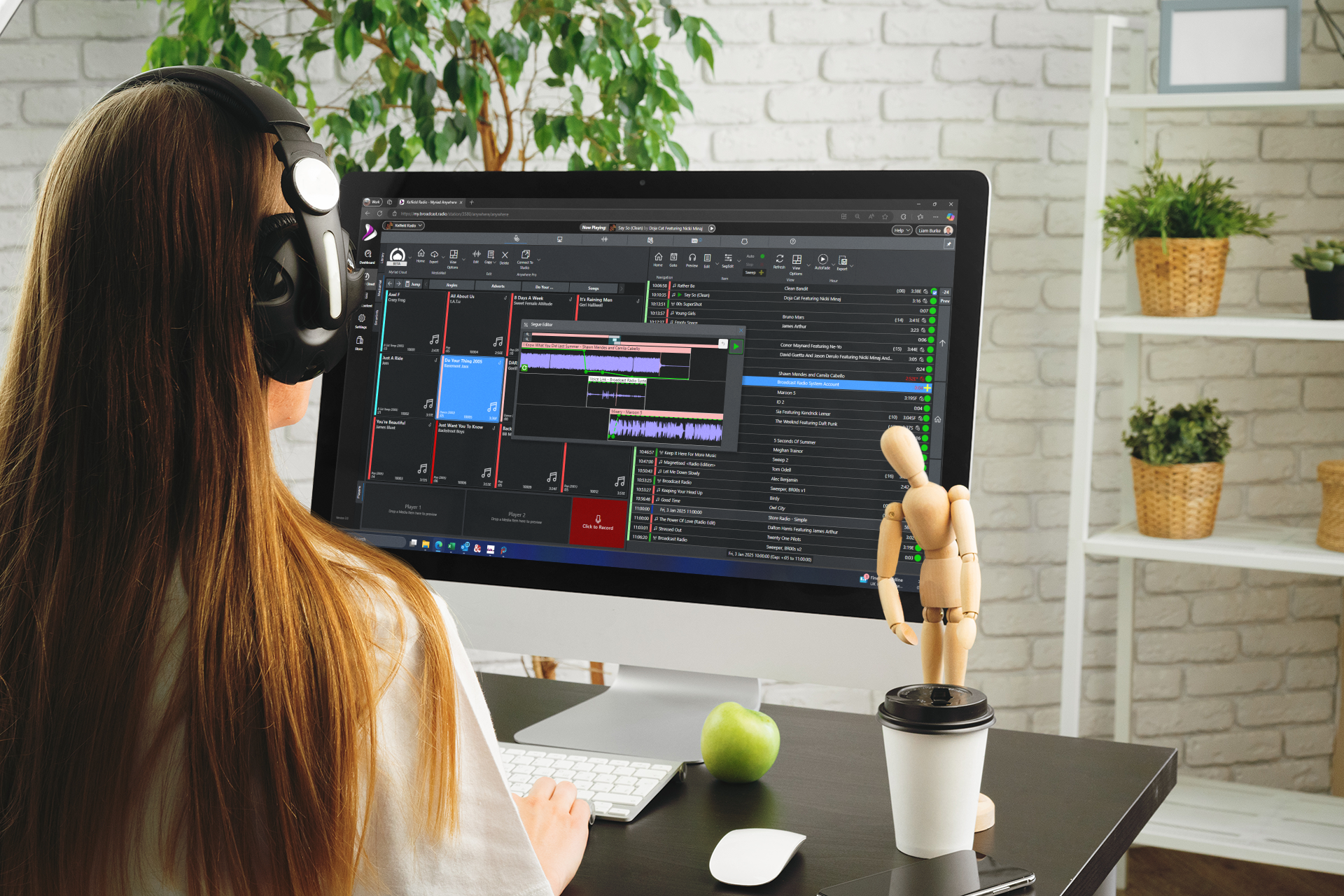
Modern cloud infrastructure: particularly when paired with quality internet connectivity: delivers latency that's imperceptible to listeners. For playout and automation, the practical impact is negligible. Your presenters can presenter real-time shows with minimal impact and your audience will never know the difference.
"Is It Reliable Enough for Live Broadcast?"
Traditional thinking says hardware you can touch is hardware you can trust. But consider this: how many hours has your station lost to hardware failures, drive crashes, or power issues in the server room?
Cloud providers like AWS, Azure, and Google Cloud operate with uptime guarantees that most on-premises setups can't match. They have redundancy built in at every level: power, networking, storage, compute. Your local server room probably doesn't.
With proper architecture, cloud-based radio automation can deliver reliability that exceeds what you're achieving today.
"What About Compliance and Data Security?"
Broadcast compliance matters. So does data protection.
Reputable cloud solutions offer:
- Geographic data residency options
- Comprehensive audit logging
- Encryption in transit and at rest
- Role-based access controls
- Regular third-party security audits
For most stations, cloud infrastructure actually improves their compliance posture compared to self-managed server rooms with inconsistent backup procedures and unclear access policies.
How Broadcast Radio Is Leading the Way
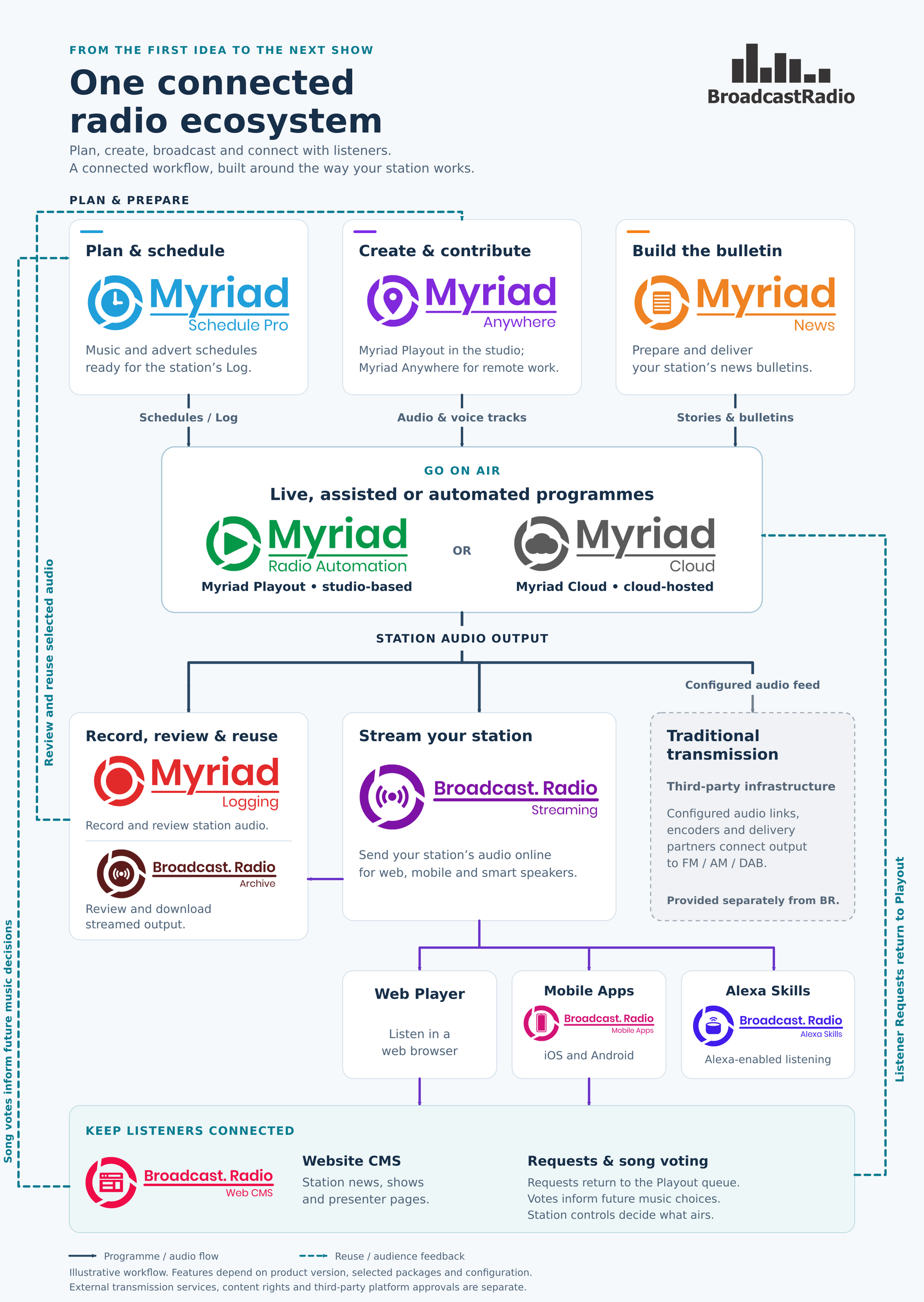
At Broadcast Radio, we saw this shift coming years ago. That's why we built Myriad Cloud.
Myriad Cloud isn't a bolt-on cloud feature added to legacy software. It's a ground-up rethinking of what radio automation should look like in a connected, distributed world.
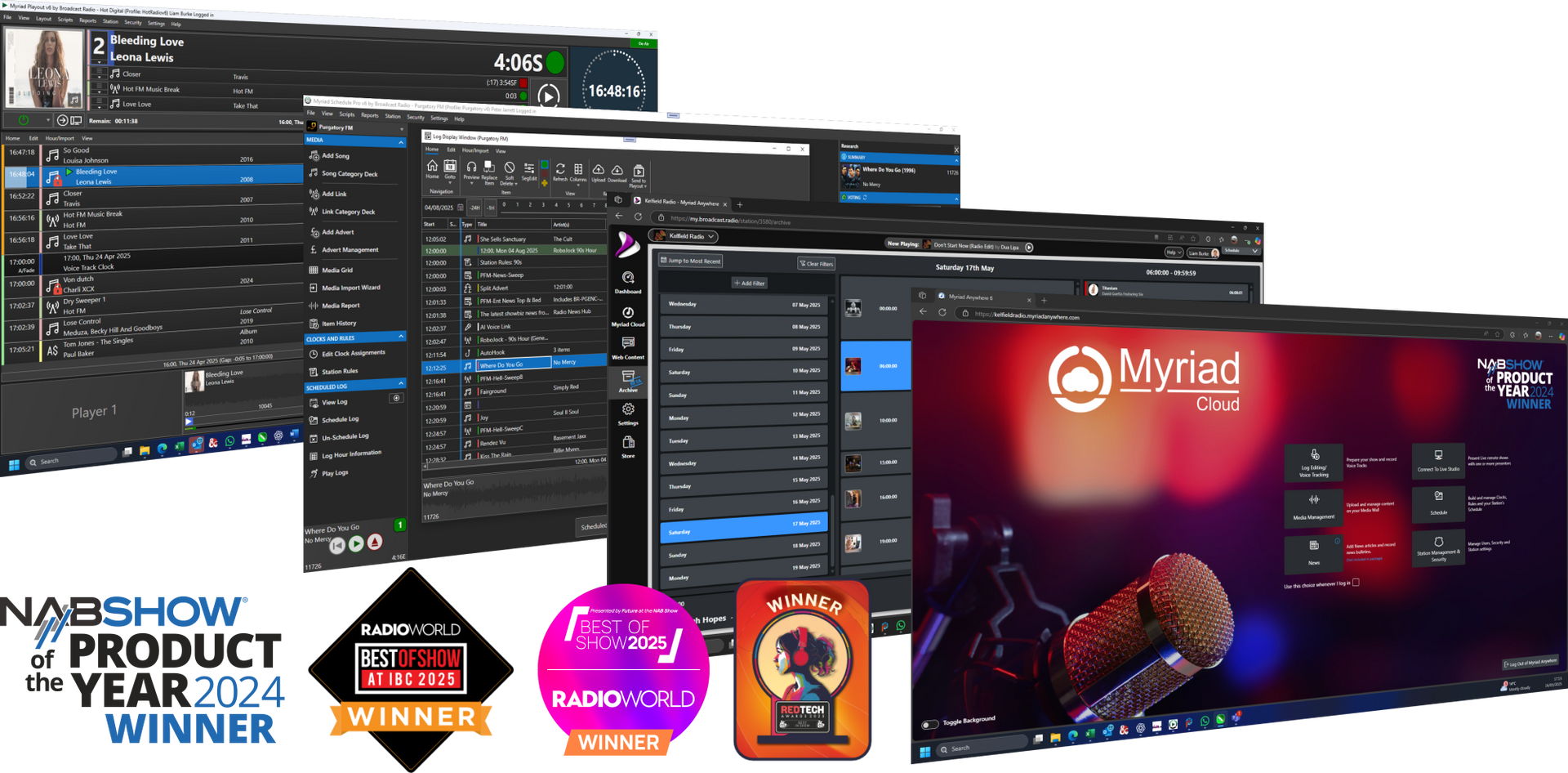
The industry agreed. Myriad Cloud was named NAB Show Product of the Year 2024 and Redtech Best In Show IBC 2025(among others):**** in recognition that cloud-native radio automation isn't just possible, it's here and it works.
What Myriad Cloud Delivers
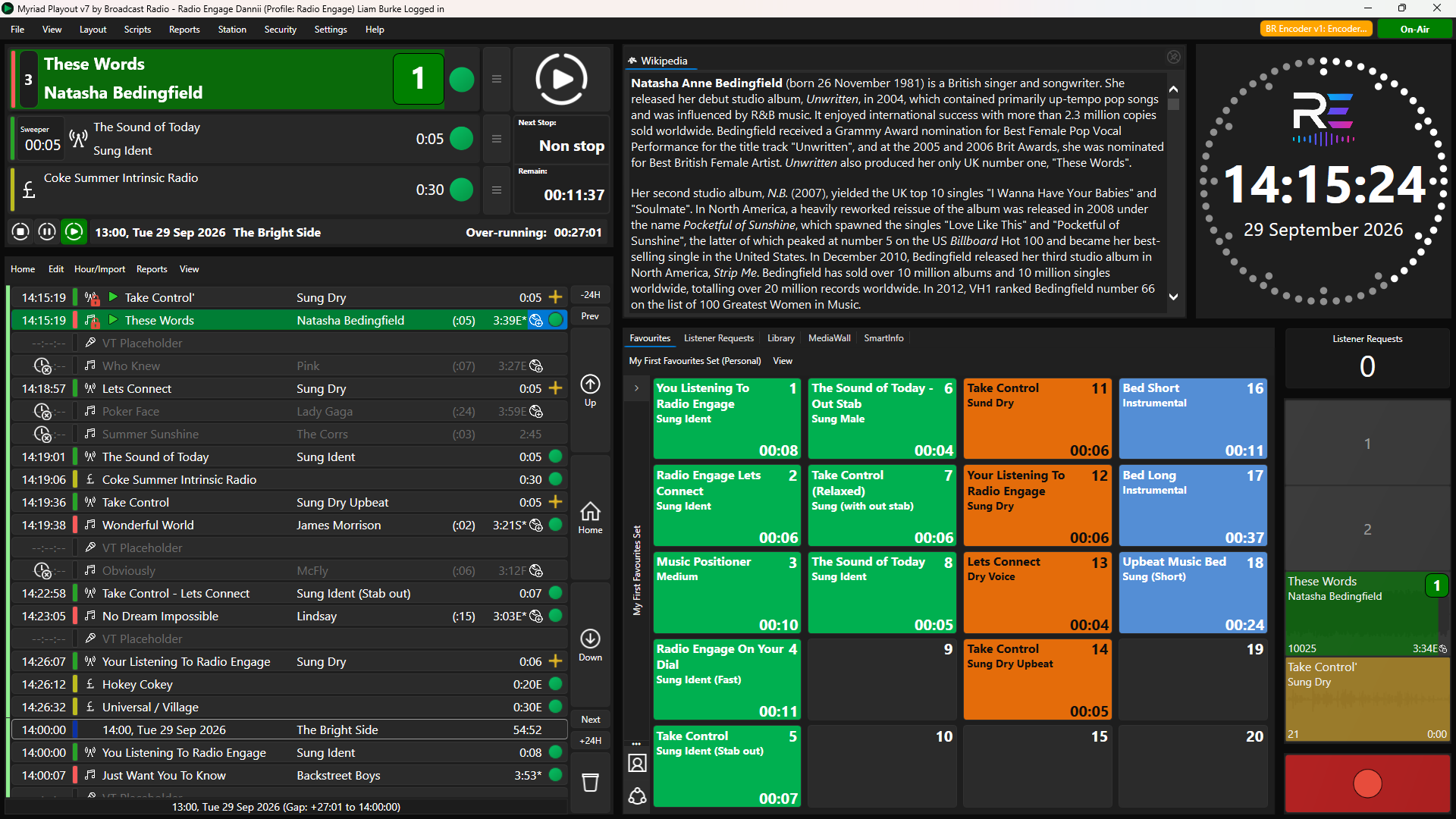
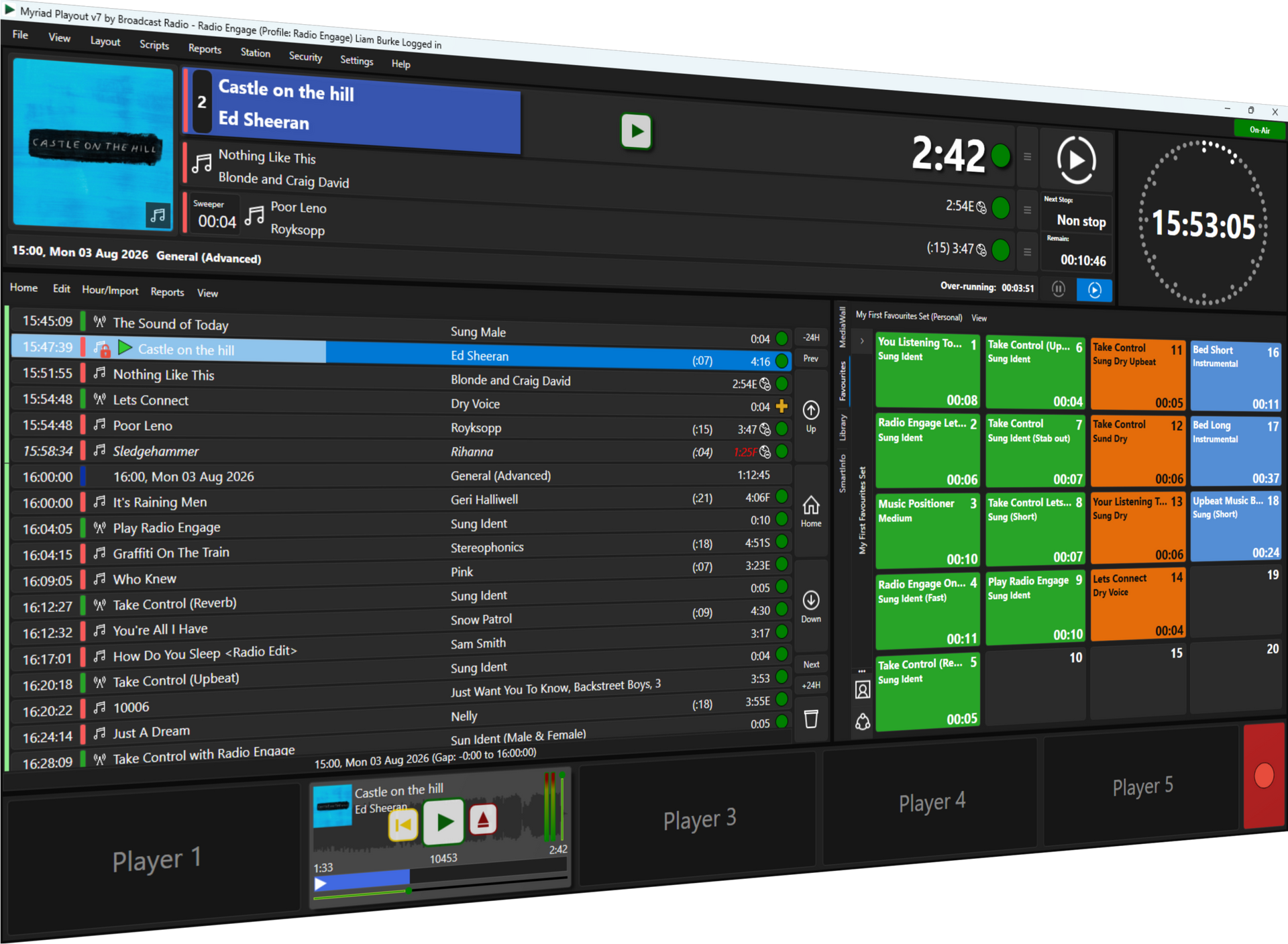
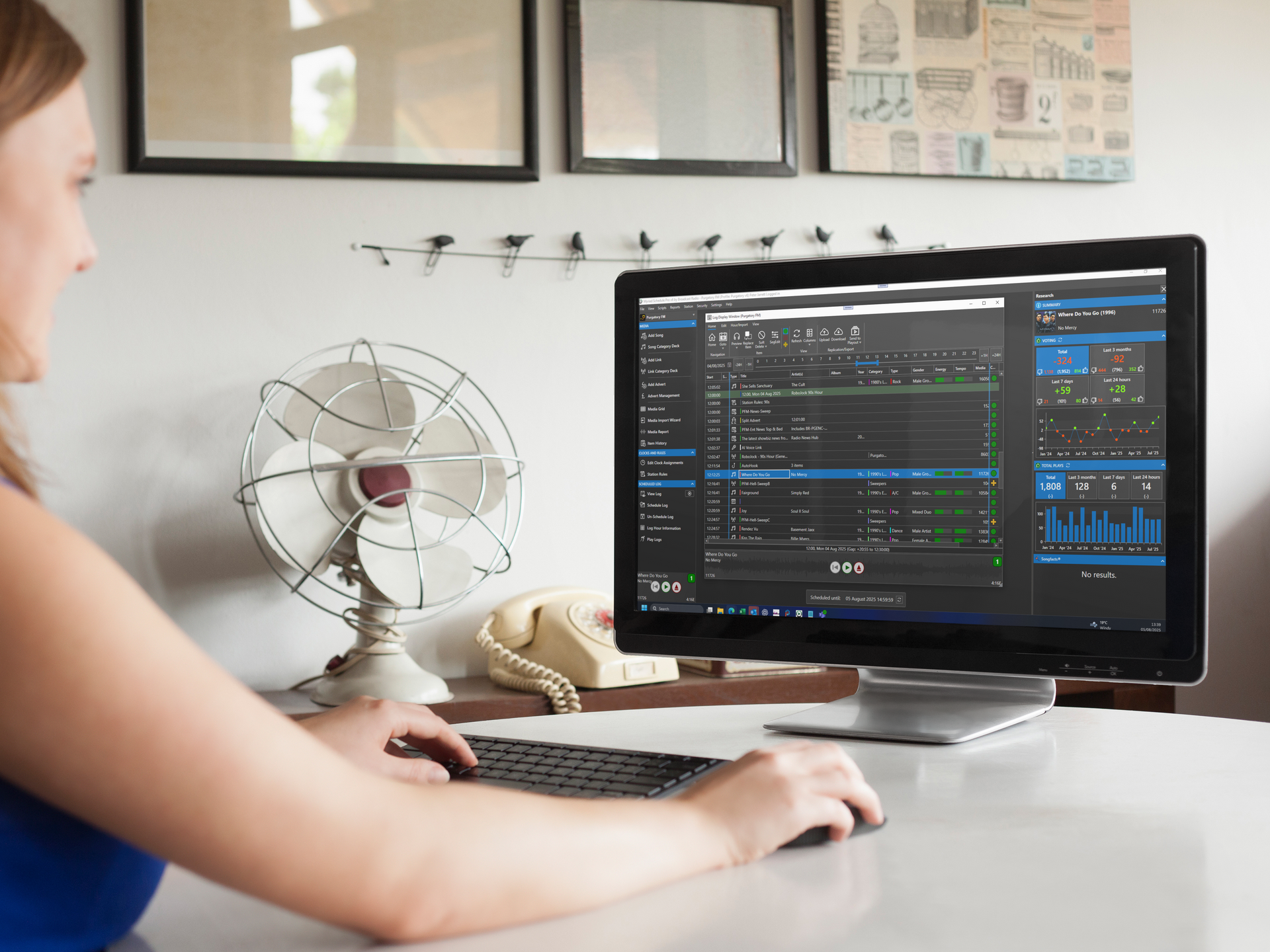
- Full radio automation in the cloud: Scheduling, playout, logging, and voice tracking: all accessible from anywhere with an internet connection.
- No server room required: Eliminate hardware maintenance, reduce energy costs, and free up physical space.
- Work from anywhere: Presenters and producers can access the system from home, on the road, or in the studio. Same tools, same interface.
- Instant scalability: Launch new stations or services without purchasing additional hardware.
- Automatic updates: New features and security patches deploy automatically. No scheduled downtime, no IT callouts.
- Built-in redundancy: Your station stays on air even if local equipment fails.
For stations already running Myriad Playout & Automation on-premises, Myriad Cloud integrates seamlessly. You can adopt a hybrid approach: keeping local playout for live shows while using cloud resources for automation, scheduling, and remote access.
The Practical Path Forward
Moving to cloud-native infrastructure doesn't require a dramatic overnight transformation. Here's a sensible approach:
- Audit your current infrastructure: Identify hardware approaching end-of-life and systems causing the most maintenance headaches.
- Start with non-critical functions: Move scheduling, logging, or remote access to the cloud first. Build confidence before transitioning live playout.
- Embrace hybrid models: Keep what works on-premises while gaining cloud flexibility where it matters most.
- Choose proven solutions: Work with vendors who understand broadcast requirements: not just generic cloud providers.
- Plan for growth: Select infrastructure that scales with your ambitions, not just your current needs.

The Window Is Open
The 78% figure represents a tipping point. When the majority of new broadcast facilities default to cloud-native infrastructure, it signals that the technology is mature, proven, and increasingly essential for competitive operation.
Stations that make the move now gain immediate operational benefits. Those that wait will eventually face a forced migration under less favourable conditions: rushed timelines, discontinued hardware, and fewer options.
The server room served radio well for decades. But the future belongs to broadcasters who can operate from anywhere, scale on demand, and focus their resources on content rather than infrastructure maintenance.
Ready to Explore Cloud-Native Radio?
Myriad Cloud is helping stations across the UK and beyond make the transition from server room to cloud: on their own terms, at their own pace.
Whether you're ready to go fully cloud-native or prefer a hybrid approach, we can help you build the infrastructure your station needs for the next decade.
Get in touch with our team to discuss your requirements, or explore Myriad Cloud to see what's possible.